Japan's flexible-workspace sector has matured fast: every major city now offers everything from hot desks to full-floor serviced suites. The right choice depends less on price per desk than on deposits, timing and your registration needs.
Conventional lease
Cheapest per tsubo at scale and fully yours to fit out — but slow and cash-hungry: 6–12 months' deposit, fit-out from a bare shell, 6-month exit notice and a restoration bill at the end. Makes sense from roughly 15–20 staff with a stable headcount plan.
Serviced office
Private, furnished, ready in days, deposit of 1–2 months, and the address can be used for company registration (tōki) — the standard landing pad for foreign subsidiaries in Marunouchi, Toranomon or Umeda. You pay a premium per person, but skip fit-out, restoration and utility contracts entirely.
Coworking
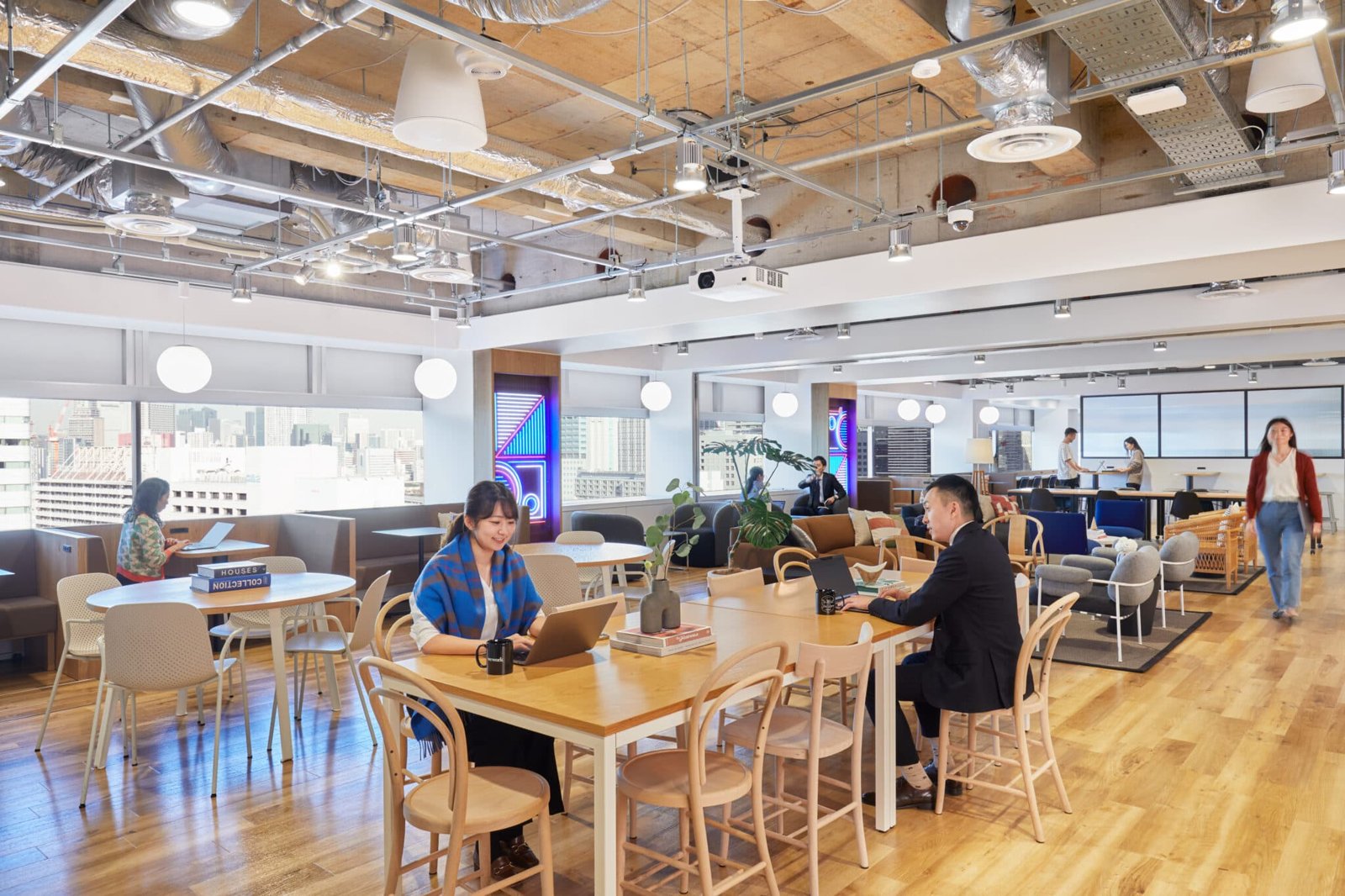
Best value for teams up to ~10 and for hybrid setups. Japanese operators range from global brands to local networks, and monthly hot-desk plans in Tokyo run ¥15,000–40,000 per person. Check two things: whether registration of your legal address is allowed on your plan, and whether meeting-room credits realistically cover your usage.
The practical playbook
Most foreign entrants sequence it: coworking or a virtual office while incorporating, a serviced office for the first one or two years, then a conventional lease once headcount is predictable and the deposit is justified. Since restoration and deposits dominate Japanese occupancy economics, switching later is less painful than over-committing early.